Saturday, July 29, 2017

New era looms for Kantha Bopha children hospital

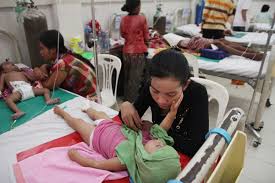
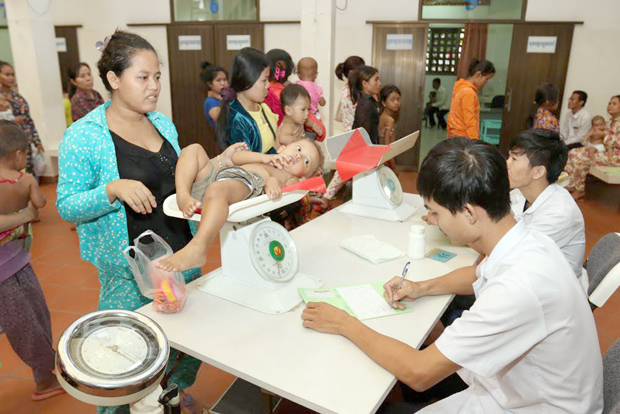
The infant's treatment is being provided free of cost, in part, thanks to numerous donations from people in Switzerland, which help run the Kantha Bopha Children's Hospitals in Phnom Penh and Siem Reap. 

Kantha Bopha children hospital recorded $7.7 million in private donations from Switzerland during the first six months of this year compared to $7.4 million during the first six months in 2016, according to Laurent.

Since prominent Swiss-born Doctor Beat Richner founded the hospitals 25 years ago, the facilities have provided treatment to nearly 18 million sick children, according to the hospitals' statistics.

However, Richner stepped down in March after more than two decades of managing the hospitals due to a serious illness and while donation haven't dipped yet, there are concerns that without his presence, they could. Richner now is receiving treatment at his home in Switzerland, but his condition remain serious, added by Laurent.

Recent comments from Prime Minister Hun Sen calling on government to ensure Kantha Bopha's continued operation came as some relief, but with the hospital now coming under the control of a government long criticised for its substandard health care system. Some including some mothers with children being treated at the hospitals-remained sceptical that Kantha Bopha can continue to operate at the same level.


Friday, 28 July 2017


Friday, February 10, 2017

CAMBODIA CLOSES 2016 WITH RECORD VISITS

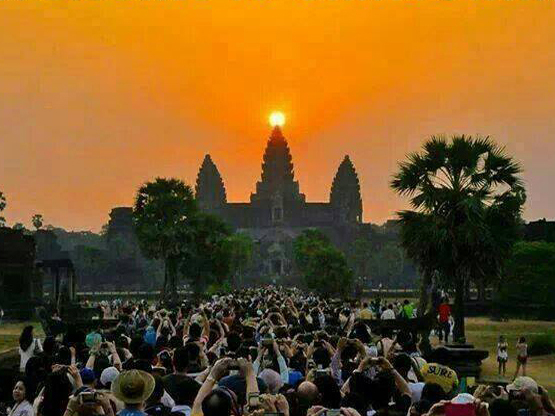
Sunrise at Angkor Wat
Released by the Ministry of Tourism, the data showed the country welcomed 5,011,712 international travelers compered to 4,775,231 visit in 2015.
The data showed 54% (2,704,367) of all international visitors arrived by airlines. Siem Reap airport received the major market share, 30,1% (1,507,039), while Phnom Penh airport secured a market share of 23.2% (1,164,240) and Sihanoukville airport just 0.7% (33,088).

Overland travel accounted for 43.0% (2,153,932) through checkpoint with Thailand, Laos and Vietnam, while sea travel was a small 3.1% (153,413).

By the end of 2016, there were 647 hotels, 1,996 guesthouses, 1,844 restaurants, 588 tourist agencies and 5088 guides registered nationwide. Cambodia expect to attract around 7 million foreign tourists in 2020.


Monday, February 6, 2017

6 Better Ways to Protect Children During Your travels


During your travels, you will probably meet children at risk-perhaps begging at crossroads, selling postcards or fruit at tourist sites, or shining shoes in train stations. You want to help them, but you don't know how. You can really help and protect these children if you take the right actions. Follow these 6 Tips and travel Child safe!


1. THINK! Children are not tourist attractions. Let's not treat them like they are.
Children living or studying in schools, orphanages or slum shouldn't be exposed to tourist visits. These places are not zoos. Imagine a bus full of foreigners visiting schools in your home country. Would you find this acceptable? 

2. Think! Volunteering with children feels good but could be harmful. Look for better ways to help them.
Working with children in institutions such as orphanages is a job for local experts not for travelers who are just passing through. Children deserve more than good intentions, they need experienced and skilled caretakers and teachers who know the local culture and language.
➦ Make sure your volunteering is a great experience and has the best impact possible. Do not work directly with children, instead, share your professional skills with local staff. You can also explore other ways to put your talents to use and find alternatives at www.thinkchildsafe.org

3. Think! Children pay a price for your generosity. Don't give to begging children.
When you give money, food or gifts to begging children or buy anything from them, you encourage them to continue begging. This prevents them from going to school and locks them into a cycle of poverty.
➥ There are better ways to support children and youth: use businesses with a social impact, such as training restaurants, and shops, or donate to organizations supporting children and their families.

4. Think! Professionals know best. Call them if a child needs help.
Helping children directly can cause problems because you don't know the local culture and laws. For instance, never take a child back to your hotel room. It's dangerous for both you and the child. When you see a child in need, the best thing to do is to contact local professionals or local authorities. 

5. Think! Sex with children is a crime. Report child sex tourism.
Sex tourism involving children is a devastating reality It happens in hotels, in bars, etc. You may even be approached and offered sex with children. When you see such a situation, don't put yourself at risk. Call a local organization or the police, so immediate action can be taken to protect the child and investigate the situation.

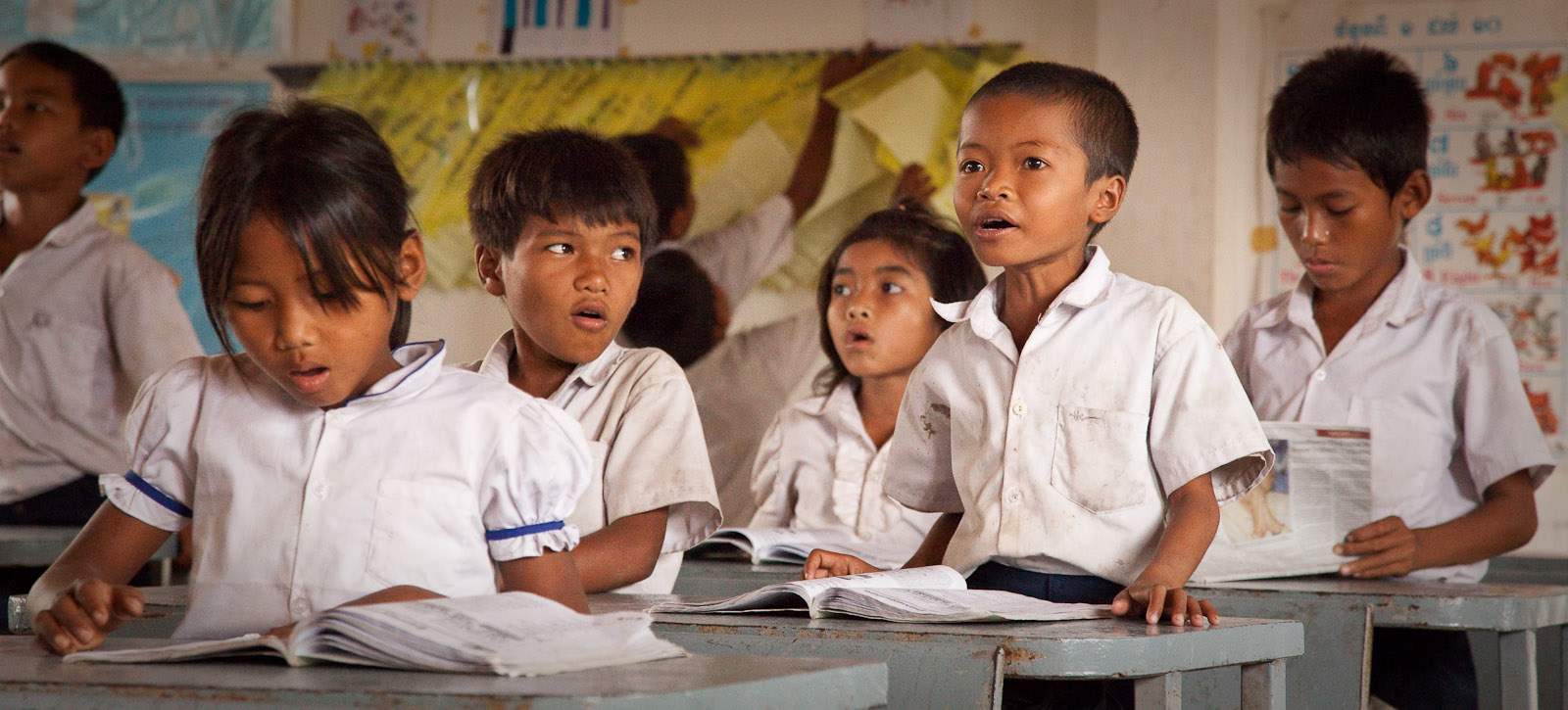
Children should be at school
6. Think! Children should not be at work instead of school. Report child labor.
Some children sell goods at tourist sites or offer their services as guides. Others are hired in tourism businesses like hotels or restaurants, and this is a problem when it hurts their education.
➥ Do not buy goods from children or use services offered by them. If you think that a business employs underage children, contact a local organization or the police. They will check the child's situation as many children are just helping out their parents after school, but some may be exploited.
Sunday, January 22, 2017

Temple passes price will be increase from February 1, 2017

The Angkor institution, the AD HOC agency that manages ticketing for Angkor Wat archaeological park, announced that it would be nearly double the entrance fee that foreigners have to pay for one day visit to ancient temple complex in Siem Reap province. Starting February 1, 2017 the cost of the one day pass will increase to $37 per person, from the current $20, it said.

Ticket price will also rise for a three day pass to $62 per person, from the current $40, while a week- long visit pass valid over a one month period will cost $72, from the current $60.

Angkor ticket office
Luu Meng, co-chair of the government-private sector Working Group on Tourism, said if the government plans to increase the ticket price of Angkor Wat and other temples in Angkor Archaeological park, it should provide a solid justification for doing so, as well as an action plan on how it will improve the site and its tourism services. '' When price goes up like this it affect visitors' feeling, so we need to show the quality products and services which they will receive from the increased price, he said.  ''For instance, we should give them a reason, like we will guarantee to provide better hygiene at the site and remove all the rubbish along the entrance roads''.

The government took over control of ticket sales to Angkor-era site from private contractor Sokimex last November and established the Angkor Institution to manage ticket sale.

A statement issued by the Angkor Institution gave no explanation for the sharp increase in ticket prices or the expected impact on tourism. However it said, $2 from each ticket sold would be donated to Kutha Bopha, a Swiss-owned children's hospital that provide free treatment for children and pregnant women.

Note: The price above for all temples in Angkor complex, except a few temples which outside of this site such as Beng Melea temple $5 per person extra.

More information will update later.

Wednesday, February 24, 2016

What you shouldn't do in Cambodia

Cambodia officially known as Kingdom of Cambodia with a population 15.14 million (2013 World Bank). This country is a conservative country but because of flowing in of tourists so local people and especially young generation influence by western culture.

There are thousands of tourists visit Angkor Wat and other temples everyday that cause Siem Reap province become the most touristy city in the country. So in order to avoid the impact between your culture and Cambodian's culture please make sure you read these tips:

- Do not walk in a public area with no shirt 
- Do not Hand out money or candies to kids or villagers: a part of encouraging them to beg for money and stay away from the school and also make jealousy among them.
- Do not take a picture of a person without asking for permission ( also please should show them as well after you took a picture of him or her.)
- Do not touch the head of a person because is considering as the highest part of the soul
- Do not talk to older people with hat on (no respect at all to them)

Hope a few of these tips would help you!

Friday, October 16, 2015

Human trafficking in Cambodia

Cambodia is transit country for victims from neighboring countries such as Thailand and Vietnam. There are many causes of human trafficking in Cambodia and has increased because of a number of factors, including lack of unemployment, education, safe migration, increased tourism and poverty. Poverty being the most significant of trafficking.

Men are trafficked for forced labor in the agriculture, fishing and construction industries. ( I met a man about 2 months ago. He is one of the victims who were escaped from a fishing boat in Thailand. He said that I paid some money to a man who promised that he could get me to work in a factory in Thailand and I would get paid around $300 to $400 a month. He traveled to Thailand through a boat and when he arrived the place he was ask to get on a fishing boat to go out to the sea. He had only a few hours only to sleep everyday and worked like that for about 3 years and he never get any money. He always stayed on the boat so he had no chance to escape from the boat. One day the owner of the boat had party and all workers were landed back and join the party and on that night it's a good chance for him to talked with a few other friends who were working with and they decided to escaped. There are five of them were trying to escape but himself by chance was cut by a sword from the guard and other friends were rescued him. They traveled back to Cambodia and had to begged people for money in order to traveled back to homeland.)

Women are trafficked for sexual exploitation and forced labor in factories or as domestic servants. Children are trafficked for sexual exploitation and forced labor in organize begging rings, soliciting, street vending and flower selling.

This video is telling you about a girl who sold by her mother to get money.


Thursday, May 21, 2015

Khmer Rouge (Red Khmer)

Khmer Rouge soldiers at Angkor Wat.
Nearly a quarter of Cambodia's population at least 1.7 million people died under 1975-1979 from execution, starvation, diseases and overwork by Khmer Rouge regime, according to the Documentation Center of Cambodia.

During their four years in power, Khmer Rouge overworked and starved the population, at the same time executing selected groups who they believed were the enemies of the state or spies or had the potential undermine the new state. People who they perceive as intellectuals or even those who had stereotypical signs or leaning, such as glasses, would also be killed. People would also be executed for attempting to escape from the commune or for breaching minor rules. If caught, offenders were taken quietly off to a distant forest or field after sunset and killed.   

During this time, everyone was deprived of their basic rights. People were not allowed to go outside of their cooperative. The regime didn't allow anyone to gather and hold discussion. If three people gathered and talked, they could be accused of being enemies and arrested or executed.
People were forcing by Khmer Rouge to work
All religions were banned by Khmer Rouge. Anyone seen taking part of religious rituals or services would be executed. Several thousands Buddhists, Muslims and Christians were killed for exercising their beliefs. Married couples were only allowed to visit each other on a limited basis. If people were seen being engage in sexual activity, they would be killed immediately. Almost all freedom to travel was abolished. People were not allowed to eat in privacy, they required to eat with everyone in the commune instead. All personal utensils were banned, they were given only one spoon and a bowl to eat with. All postal and telephone services were abolished.


Vietnamese troops fought their way into Cambodia in December 1978. They captured Phnome Penh on January 7, 1979. The leaders of the Khmer Rouge then fled their to the west of Cambodia and reestablished their forces.

The Khmer Rouge continued to exist until 1999 when all of it's leaders had defected to the Royal Government of Cambodia, been arrested or had died but their legacy remain.

Millions of mines were laid by the Khmer Rouge and Government forces, which have led to thousands of deaths and disabilities since 1980s. The large proportion of the Cambodian people have mental problem because their family members were lost and their spirits damaged. These factors are the major causes of the poverty that plagues Cambodia today.


Saturday, April 18, 2015

Khmer New Year Celebration

Khmer New Year the word which say in khmer language ''Bon Chol Chhnam Thmei'' usually held in the middle of April every year, which is the end of the harvesting season before the next planting season coming in the next few weeks after the Khmer New Year Celebration. Normally this celebration last fro 3 days.


People usually clean up their houses, buy new clothes and prepare incenses, candles, flowers, fruits, drinks to be ready before the New Year coming.


In between one week of the New Year lots of people travel back to their homeland to meet their family for this special day.

1st Day of the New Year ( Moha Songkran)

In the morning Cambodian people will go to the monastery (Temple) to offer food to the monks and also to get blessing from the monks. 

2nd Day of the New Year (Wanabot)

It's the day that children will offer gift to their parents and grandparents, younger will offer gift to their elders. In the evening people go to build sand mountains at the monastery to remember their ancestors who have passed away and the monks give them blessings of happiness and peace in their lives.

3rd Day of the New Year (Leung Sak)

It's the last day of the New Year celebration. Today they held a ceremony called Srang Preah the purpose of this this ceremony is to clean the Buddha Statues, parents, grandparents and elders. During this ceremony they apologize for any mistakes they have made from their parents and elders.


Beside that during these 3 days celebration they also gather around and play some traditional games with relatives and friends and also dancing together with their traditional music.


Angkor Wat at night of the New Year Days.


Monday, January 26, 2015

ABOUT CAMBODIA

Population

15,205,539 (July 2013 est.)

Note: estimates for this country take into account the effects of excess mortality due to AIDS, this can result in lower life expectancy, higher infant mortality, higher death rates, lower population growth rates, and changes in the distribution of  population by age and sex than would otherwise be expected.

Age structure

  0-14   years            : 31.7% (male 2,428,507/female 2,397,327)
15-24 years              : 21.2% (male 1,597,990/female 1,627,161)
25-54 years              : 38.2% (male 2,828,752/female 2,985,226)
55-64 years              :   4.9% (male    287,073/female    464,991)
65 years and over    :   3.9% (male    221,356/female    367,156) (2013 est.)

Population growth rate

1.67% (2013 est)

Birth rate

24.88% births/1,000 population (2013 est)

Death rate

7.88% deaths/1,000 population (2013 est)

Major city population

Phnom Penh (Capital) 1.55 million (2011)


Map of Cambodia


Friday, January 9, 2015

HANDS UP IS BETTER THAN HAND OUT

Hands up is better than hand our!

Please think again before you give something to beggars on the street especially kids who ask you to buy milk powder for the baby who he or she carrying with. It's just a SCAM!

Milk powder will sell back to another shop with cheaper price than they make money!

If you want to help poor people, try to find a better way than hand out something to them directly because it's the way to create more begging culture and make jealousy between people or families.

Education is the best way to break the poverty so you should find more information about some organizations who are working with this program and help poor people through them by donate books, school materials and what ever you think helpful to this program.

Some orphanages and organizations are not reliable so check more information about them or better see them directly then you will see how they generate fund to program. 

Better buy goods from adults

Siem Reap has known as the most touristic city of Cambodia. When ever you go to visit temples you will see a lot of kids selling post cards and some other stuffs. It's not a good way to buy goods from kids because it's like you encourage more kids to sell goods to the tourists.

You will ask why you can't buy goods from kids?

==> When you buy goods from a kid then parents of that kid and the other kids will think that kids can attract tourists to buy goods from them so they will ask all of their kids to sell that everyday and some of them might ask their kids to stop for a few days from school or give up the school to help them selling goods. Or some of the kids will think the same that they can earn a lot of money easily from selling goods then they stop going to school by themselves.

If this make sense to you please share it to your friends!


Sunday, September 14, 2014

P'CHUM BEN (FESTIVAL OF DEAD)

This festival is a kind of ALL Souls' DAY, when respects are paid to the dead through offerings made at wats (pagodas). Offerings include paper money, candles, flowers and incense, as well as food and drink, all passed through the medium of the monks. P'chum Ben lasts for several days and devout Buddhists are expected to visit seven wats during the festival. Head to the village of Vihear Sour in Kandal Province, about 35km northeast of Phnom Penh, to witness authentic bareback buffalo racing and traditional Khmer wrestling.

This year this festival will held for 3days from 22nd of September to 24th of September. It's also a happy time of family meeting day. Most of the workers will have 3 days off during this festival because it's is a national holiday.
Food after do offering to the monks for their ancestors

Buffalo racing during P'chum Ben Festival


INTERESTING PLACES OF SIEM REAP

I love Cambodia team at Angkor Wat Temple
There are lots of beautiful site in Siem Reap that attract more visitor to come more and more to this city. So make sure you bring your camera with full battery to take photos while you visiting around.
Sunrise at Angkor Wat, the best view that you rarely see.


Saturday, September 13, 2014

TOP 10 KINGS OF ANGKOR

A mind- numbing array of kings ruled the Khmer empire from the 9th to the 14th centuries AD. All of their names include the word 'VARMAN'which means 'protector'. Forget the small fry and focus on the big fish in our Top 10 kings:

King Jayavarman VII
Jayavarman II       (r 802-50) Founder of the Khmer empire in AD 802.

Indravarman I       (r 877-89) Builder of the first Baray (reservoir). Preah Ko and Bakong.

Yasovarman I        (r 889-910) Moved the capital to Angkor and built Lolei temple and Phnom Bakheng.

Jayavarman IV     (r 924-42) Usurper king who moved the capital to Koh Ker.

Rajendravarman II (r 944-68) Builder of Eastern Mebon, Pre Rup and Phimeanakas.

Jayavarman V      (r 968-1001) Oversaw construction of Ta Keo and Banteay Srei.

Suryavarman I     (r 1002-49 expanded the empire into much of Laos and Thailand.

Udayadityavarman II (r 1049-65) Builder of the pyramidal Baphuon and the Western Mebon.

Suryavarman II    (r1112-52) Legendary builder of Angkor Wat and Beng Mealea temples.

Jayavarman VII  (r 1181-1219) The king of the god-kings, building Angkor Thom, Preah Khan and Ta     Prohm Temples.

Wednesday, August 27, 2014

House Building For A Poor Family

A student group from Turkey was building this house for Mr. Tek from type 1 poor family in Treak Village.
Siem Reap has known as the tourist city. There are lots of people come to visit this city focus on temples and especially Angkor Wat Temple. Even the number of tourists visiting Siem Reap has risen from a year to a year and tourism is bringing real benefits to the people of Siem Reap but this city still have high level of poverty, about 36% of the population exist below the poverty line. People are also drawn to the town in search of works, or to beg on the streets, and many children sell books and other souvenirs to supplement the family income. Landmine victims also try to earn a living by selling books and souvenirs.

Remember that even you confront with the beggars who beg for money or milk powder please don't give them. If you give them it mean you are voting them to do that. On the other hand, it's just a scam

Families in Cambodia have been classified into 3 types or levels:
- Level 1 family: is the poorest family in the community who has not enough food to eat, no education or had been forcing to stop the school when they were young or in primary school, most of them have no own land to do the rice field but they get hiring from the type 3 families to work in the rice field and get about $4 per day.
- Level 2 family: family who is a little bit better than level 1 and some of them have a piece of land to do rice field just for eat but they have no saving.
- Level 3 family: Richest in the community, has been educated and has saving. Most of them have their own big fancy house on the main road and rice field to do for eat and sale.

If you want to get to see those people and learn more about their daily life, you can check with some travel agencies in town to do countryside tour.
www.beyonduniqueescapes.com
A student group from Belfast were building a house for grandma Out in Kompheim Village.

A student group from Hong Kong International School were building some part of the walls of Husk School in Kompheim Village.


Saturday, August 23, 2014

MARKETS

'Phsar' mean 'market' in Khmer. The traditional Cambodian phsar is a sprawling, semi-covered affair of small shops and stalls, and a visit to one is ans important part of any Cambodian experience. Siem Reap's most popular traditional market Phsar Chas (Old Market), caters to visitors and locals, offering a varied selection of souvenirs, home wares and food - a true cultural shopping experience.

Angkor Night Market
Siem Reap's first and original night market, located in the heart of town amongst other late night shopping venues. Very popular. The Market opens in the mid afternoon, stays open until at least midnight, harbors more than 200 thatch roofed shops and stalls offering souvenirs, handicrafts, fish massage, clothes, Asian and international food, drinks, books, DVDs, electronics, jewelry, art and there's even a travel agent. The shopping atmosphere is peaceful and relaxed and the welcoming Island Bar at the back provides a nice place to relax and chill over some very reasonably priced drinks and snacks.

Phsar Chas (Old Market)
The Old Market is the most popular of the old traditional markets for visitors, located in the center of town - the market and surrounding streets known as the 'Old Market/Pub Street Area'. More than half the Old market is focused on souvenirs, crafts, curios, silks and such. The riverside of the market has dozens of souvenir stalls. The riverside of the market has dozens of souvenir stalls. The opposite side of the market along Street 9 is lined with food stalls and several places selling Cambodian spices, sweets and packaged snacks. Part of the interior of the market is still geared more to the locals, selling fruits, vegetables, meats, clothes, etc. The surrounding streets are filled with restaurant, bars and shops and the nearby Pub Street is the entertainment hub Siem Reap.

Phsar Leu Thom Thmey
(Big, New, Upper Market)
Phsar Leu is the main traditional and biggest market in Siem Reap for the locals, set just outside the main town area - an expansive market building full of vendors and stalls hawking everything from fresh fruits and vegetables to motorcycle parts, clothing and rice by the bushel. Not a place to shop for souvenirs but instead to see a bit of real Cambodia right in close to town. Opens and closes with the sun. Busiest in the morning time.

Tuesday, August 19, 2014

GETTING AROUND TOWN & TEMPLE

Siem Reap city is almost small enough to get around on foot, but not quite. The Angkor Park entrance is 4 kilometers from town and the temples inside the park are as much as 3 kilometers apart, ordinarily requiring some sort of transportation to tour. Tuk-tuks, motorcycle taxis and cars taxis are the most popular forms of transportation. In-town it's always easy to find tuk-tuks and motodups for short trips. Transportation to and around the temples is usually hired by the day. To avoid later misunderstandings, make sure to negotiate the details of the driver's services carefully - exact price, what times you expect the day to begin and end, availability during lunch hours, limitations on you itinerary and touring route, extra charges for distant temples, etc. Normally sunset is include with the tour if you go to see temples around small or big circuit tour, extra charge about $5 for sunrise for drivers or tour guides to go with you from sunrise. Be aware of doing sunrise and sunset on the same day if you go with the tour guide, they have no enough energy to stay with you from sunrise till sunset.

Moto-remorques (Tuk tuks)
Moto-remorques are the most common and popular form of transportation in town - the semi-enclosed trailer offering a comparatively pleasant ride. Tuk-tuks are omnipresent in Siem Reap. Just step to the curb and they will find you. For short trips around town, foreigners are expected to pay $5 to $7. Bargain! Full day rates for transportation to the temples: $15-$20/per day depend on your itinerary. Additional charge for transport to distant temples.

Cars/Taxis
Private car taxis offer a comfortably air-conditioned way to tour the temples, though they are the most expensive option. Rates: $25-$30 per day plus additional charge for transportation to distant temples off the main circuits. Taxis from the airport to town also offer taxi.tour services to the temples.

Thursday, August 14, 2014

OVERLAND TO/FROM THAILAND

Most overland travelers between Thailand and Siem Reap cross at the Aranyaprathet/Poipet border crossing, but train (on the Thai side) and taxi travel is also available. Cambodian visas are available at the border. Going the other direction, 15-day Thai transit visas are available free of charge. Other types of Thai visas are not available.

You will likely be confronted by a couple of annoyances at the border. Touts and drivers on the Thai side of the border will tell you that you should or even must get a Cambodian visa from a ' local consulate ' on your way to the border crossing. DO NOT USE THEIR SERVICES. DO NOT GET YOUR VISA AT THE 'LOCAL CONSULATE. The visa is valid but is overpriced. Do not get your Cambodian visa until you have stamped out of Thailand, crossed the border into Cambodia and arrived at Cambodian ''Visa-on-Arrival'' station. Also, the touts will tell you that you need to exchange foreign currency for Cambodian riel. THERE IS NO REQUIREMENT TO CHANGE MONEY AT THE BORDER. It is a scam to get you to change money at a rip-off exchange rate.

Aranyaprathet, Thailand/Poipet, Cambodia Border Crossing: Route from Bangkok to Siem Reap

It's a 465km, 6-9 hour trip from Bangkok to Siem Reap. The usual route begins with a 4-5 hour bus or a train ride from Bangkok to the border crossing at Aranyaprathet, cross the border into Cambodia and then 3 more hours on to Siem Reap, though direct, non-stop buses have recently been added.
 
Direct Bus 
There are now direct buses between Siem Reap and Bankok. One ticket, one price, no bus change at the border.

The bus makes 2-3 rest stops and snack is served, but you may want to pack some extra food for the trip. total trip: 7-9 hours. Price: $25-$30 (750B), not inclusive of visa fees. Buses leave early, 7AM-9AM in both directions. At the border crossing make sure to get you visa at the Cambodia ''Visa-on-arrival'' immigration station, not 'local consulate'.

In Bangkok tickets are sold and buses depart from Morochit station. In Siem Reap purchase ticketss through the Nattakan office on the Sivutha Blvd or at a travel/tour agent. In Siem Reap the ticket usually includes free pick up form your hotel.

Wednesday, August 13, 2014

OVERLAND TO/FROM VIETNAM

Cambodia shares several border crossings with Vietnam, all fairly distant from Siem Reap. The Bavet Crossing offers easiest access to Phnom Penh.

Bavet Checkpoint: Moc Bai, Vietnam/ Bavet, Cambodia (National Route 1 to/from Phnom Penh)
Cambodia visas available at the border. Vietnamese visas are NOT available at the border.

The Moc Bai crossing is the most convenient to Phnom Penh and Ho Chi Minh City. The road is in good condition, though the bridge over the Mekong River at Neak Luong town is still under construction requiring ferrying across the river.

Bus: There are several bus companies offering multiple daily direct a/c bus service between Phnom Penh and HCMC for $10-$12, taking about 6 hours. Phnom Penh Sorya, Mekong Express and Capitol Tours all have regular bus service PP-HCMC. In HCMC, most of the bus stations and offices are in the Pham Ngu Lao area.

Please check with Tourist Information Center and some travel agencies in town for more information.

Sunday, August 10, 2014

INTERNET/TELEPHONE IN SIEM REAP, CAMBODIA

Cambodia Country Calling Code: 855
Siem Reap Provice Area Code:    063

Telephoning
Cambodia telephone numbers are usually listed beginning with a '0' (for example: 063-000000.) The first three numbers (010, 011, 012, 016, 023, 063, 069, 070, 083, 085, 093, 099, 086, 087 etc.) represent the provincial area code or the mobile phone system.

When dialing domestically, it is necessary to dial the entire number including the '0' at the beginning. (for example: 010-000000). When dialing internationally from Cambodia, precede the phone number with a gateway code such as 001, 177, 153, 163, 007 (for example: 177-662-251-0000)

Internet/E-mail
Internet access in Siem Reap is inexpensive, widely available and of moderate speed. There are still some internet shops and cafes located across town and priced around 1500-3000R ($0.40-$0.75) per hour. But these days most of the hotels, guesthouses and many of the restaurants and bars offer free wifi access.

Post Office
Located on Pokambor Av. (river road, west side of the river) Open 7:00AM-5:30PM everyday. Offering seemingly reliable general postal & parcel (EMS) services and domestic and international telephone. Philately enthusiasts take note, sets of modern and historic Cambodian postage stamps are on sale in the lobby.

If you already bought postcards from the shops, markets or children selling on the street and you don't know where post office is or you don't have time to go drop them there by yourself, just check with your hotel reception, they will drop it for you by pay $0.75-$1 per post card (if you don't have stamp yet).


Tuesday, August 5, 2014

Banking And Money

Money
Though Cambodian riel (R) is the official currency, US dollars are used as commonly used as riel. Most businesses, especially hotels, restaurants, airlines and other transportation, markets and souvenir shops set their prices in US dollars. Though the exchange rate varies over time, it has hovered near 4000R to the dollar for several years and many small businesses treat 4000R as the de facto rate regardless of today's exact exchange rate.

All Cambodian currency is in the form of paper notes. Currently the country does not employ coins. Notes range in denomination from 100-100,000 riel. 500, 1000, 2000, 5000 and 10,000 riel notes are the most common and useful denominations.

Money changers tend to give a slightly better exchange rate than the banks. When accepting US dollars in exchange or change, inspect the bills carefully. Marred riel is acceptable tender, but the tiniest tear in a large US note renders it worthless in Cambodia.

ATMs
ATMs are located across town with several at banks along Sivutha Blvd and around Old Market area. All ATMs accept Visa and most also accept Cirrus, Plus, Maesro, and Master Card. Unless you have a Cambodian bank account, all ATMs dispense in US dollars.
Credit Cards
Visa and Master Card (MC) are the most widely accepted credit cards in Cambodia. AMEX, JCB cards, the ANZ blue spot card and  the ACLEDA Bank Gold Dot card (GD) are accepted at some places, Some businesses charge a 2%-4% fee on credit card payment.
Travel Checks
Travelers checks are accepted at most banks, major hotels and restaurants and some money changers.
Banks
Banks provide currency and travelers check exchange, credit card advances, telegraphic transfers and all usual banking services. Most banks are open from 8:00AM to 3:00PM or 4:00PM, Monday through Friday. Some banks are open Saturday morning until 11:30AM.